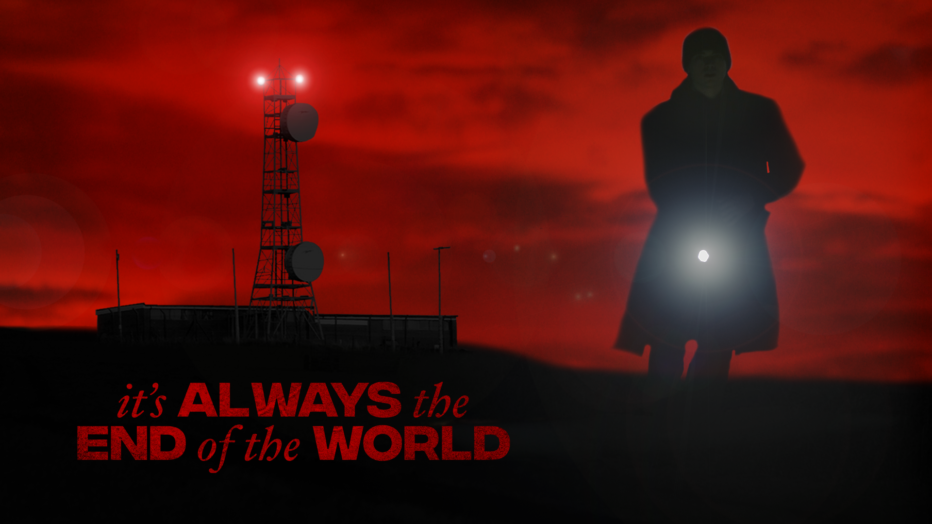
It’s Always the End of the World (2026) – Review
It’s Always the End of the World (2026) – Review
George Earwicker’s feature debut as writer-director follows Max and Charlotte on a trip to a remote cabin. However, when Max discovers an old trunk buried in the bushes, its contents – a collection of documents, audio cassettes and VHS tapes – begin to reveal a disturbing history spanning half a century of murder, secrets and abuse. Increasingly consumed by what he uncovers, Max embarks on a journey to unravel not only the mysteries surrounding the trunk, but also Britain’s past and, ultimately, the very nature of life itself.
The marketing blurb describes It’s Always the End of the World as an exploration of grief, depression and guilt, as well as a defiant statement about the importance of confronting the past, imagining a future and loving one another. Starring Jacob Mellers as Max and Robyn Faye as Charlotte, the film comes from independent production company The Sandbagos, which, as I understand it, is based in Dorset – just like me. Naturally, discovering that the film had local connections made me all the more eager to embrace it. Unfortunately, despite that initial goodwill, I came away feeling considerably more confused than convinced.
Visually, there’s plenty to admire. The cinematography is accomplished, the photography impressive, and Earwicker manages to avoid the claustrophobic feel that might easily have plagued a film set largely within the confines of an isolated cabin. Mellers and Faye also do their best with material that doesn’t always give them much to work with. The problem is that while the film clearly has weightier ambitions, it struggles to translate them into a coherent narrative, leaving something that feels frustratingly undercooked.
The middle section is undoubtedly its strongest, and perhaps its most conventional. As Max becomes increasingly obsessed with the contents of the mysterious trunk, the film settles into more familiar mystery-thriller territory. Murder, abuse and assorted depravity gradually emerge as he pieces together the disturbing revelations contained within, with his growing fixation threatening to push him towards a complete psychological breakdown. Here, there’s a genuine sense of intrigue, and the film finally finds a narrative thread worth following.
Unfortunately, that momentum doesn’t last. Perhaps I’ve missed something along the way, but the subsequent shift away from the murder-mystery elements towards Max’s own feelings of guilt and unresolved grief feels jarringly disconnected. Rather than developing naturally from what has gone before, these themes seem to arrive from an entirely different screenplay, awkwardly shoehorned into the proceedings without sufficient groundwork or emotional justification.
There are clearly interesting ideas at play here, and the film certainly looks the part, but ambition alone doesn’t guarantee cohesion. For all its technical merits and commendable intentions, It’s Always the End of the World ultimately struggles to bring its disparate elements together. Given its Dorset connections, I was rather hoping to champion this one. Sadly, local pride can only carry a film so far.