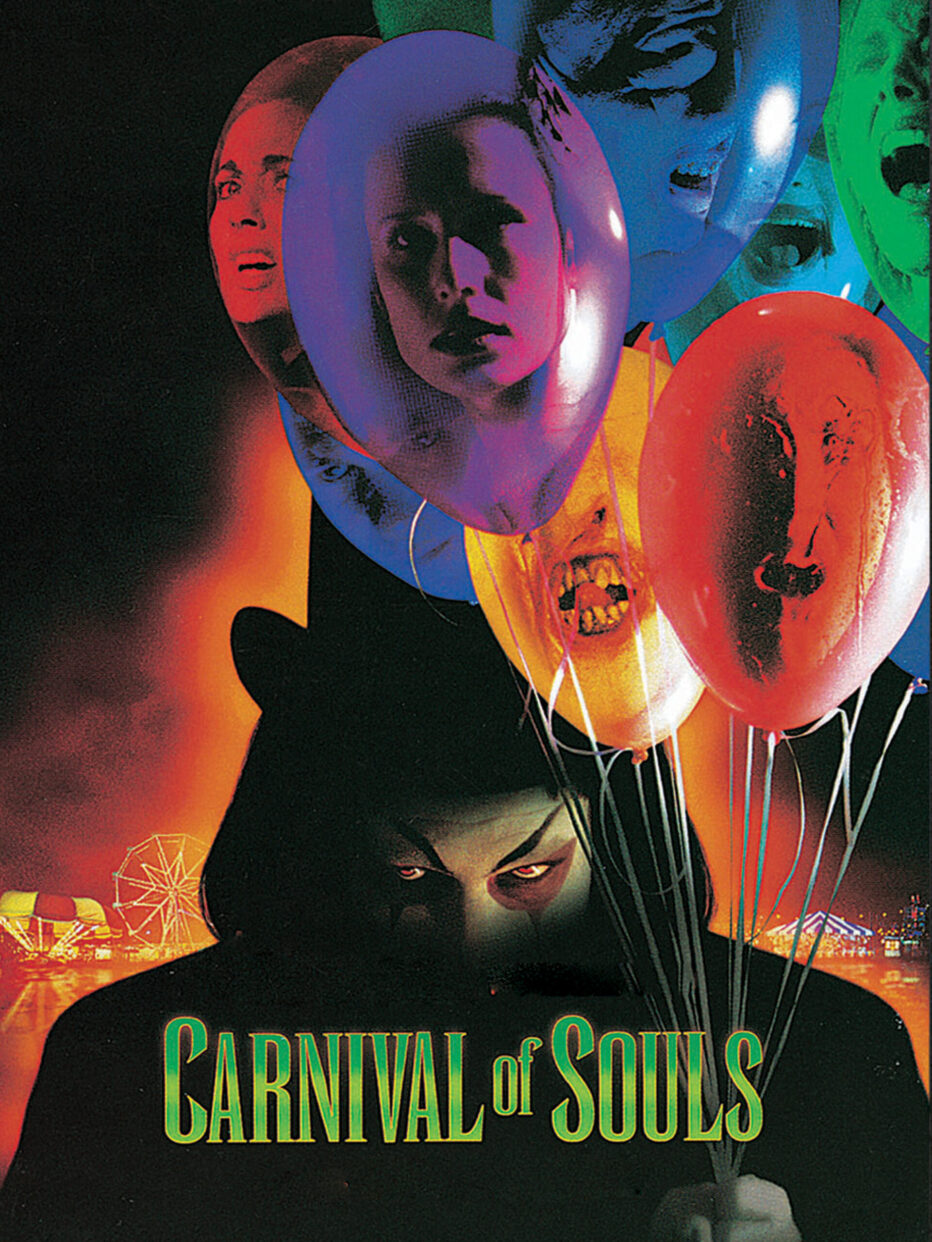
Carnival of Souls (1998) Review
Carnival of Souls (1998) Review
A decidedly liberal reimagining of Herk Harvey’s 1962 cult chiller, Carnival of Souls (1998) arrives with Wes Craven attached as executive producer, although you would be forgiven for assuming he had directed it given some of the critical flak the film subsequently attracted. This time around, the story centres on Alex Grant (Bobbie Phillips), a woman involved in a car accident whose circumstances are rather more complicated than they initially appear.
The remake takes a different approach to its predecessor, opening with a woman desperately fighting off rapist Louis Seagram (Larry Miller) while her young daughter watches helplessly. Unable to save her mother, the girl reappears twenty years later as Alex, who meets her sister Sandra (Shawnee Smith) on the anniversary of the tragedy.
As Alex gets into her car, Seagram materialises in the back seat, making sexually threatening advances towards her and, by implication, her sister. Alex responds by putting her foot down and driving straight into the harbour. What follows will be familiar territory to anyone acquainted with the original, although newcomers may find the narrative’s increasingly disorientating twists a little frustrating. Seagram also makes occasional appearances as a clown, sporting a look that bears a rather disturbing resemblance to serial killer John Wayne Gacy. Whether intentional or not, it certainly adds an extra layer of creepiness to proceedings.
Fans of the original will appreciate the appearance of Sidney Berger, who played the sex-obsessed neighbour John Linden in Harvey’s film, here taking on the role of the policeman who opens the car door after the vehicle is recovered from the harbour. It is a neat little nod to the original, although the revelation that follows is hardly going to floor anyone familiar with the source material.
Sadly, Candace Hilligoss, the star of the 1962 film, declined to appear in the remake, reportedly feeling that she should have been consulted before the project received the green light. Given that the original had entered the public domain, however, no permission was required. Hollywood can be a rather ruthless business, and copyright law is rarely sentimental.
Unable to secure a theatrical release in the United States, this reimagining attracted some particularly harsh reviews, with Wes Craven’s name frequently taking a beating. The irony, of course, is that Craven served only as executive producer rather than director. One suspects that a few critics were sharpening their knives for the wrong man.
To be fair, Carnival of Souls is not nearly as dreadful as its reputation might suggest, particularly when measured against some of the remakes and reimaginings that have subsequently lumbered onto cinema screens. While it lacks the haunting simplicity and eerie atmosphere of Harvey’s original, there is at least an attempt to do something different with the story, particularly in its opening and closing sequences. It may not always work, but the willingness to experiment deserves some credit.
Unfortunately, the film’s supernatural imagery feels rather too familiar. Its demonic visions and psychological disorientation inevitably recall Jacob’s Ladder (1990), itself part of a wider tradition of horror films exploring the uncertain boundary between life, death and the afterlife. The result is a film that occasionally feels less like a fresh interpretation and more like a collection of borrowed nightmares.
Ultimately, this Carnival of Souls is an imperfect but reasonably worthwhile curiosity. It lacks the unsettling elegance of the original and never quite establishes an identity of its own, but it does at least attempt to take the material in a different direction. For horror completists, that may be enough to justify a viewing. For everyone else, the original remains the real attraction.