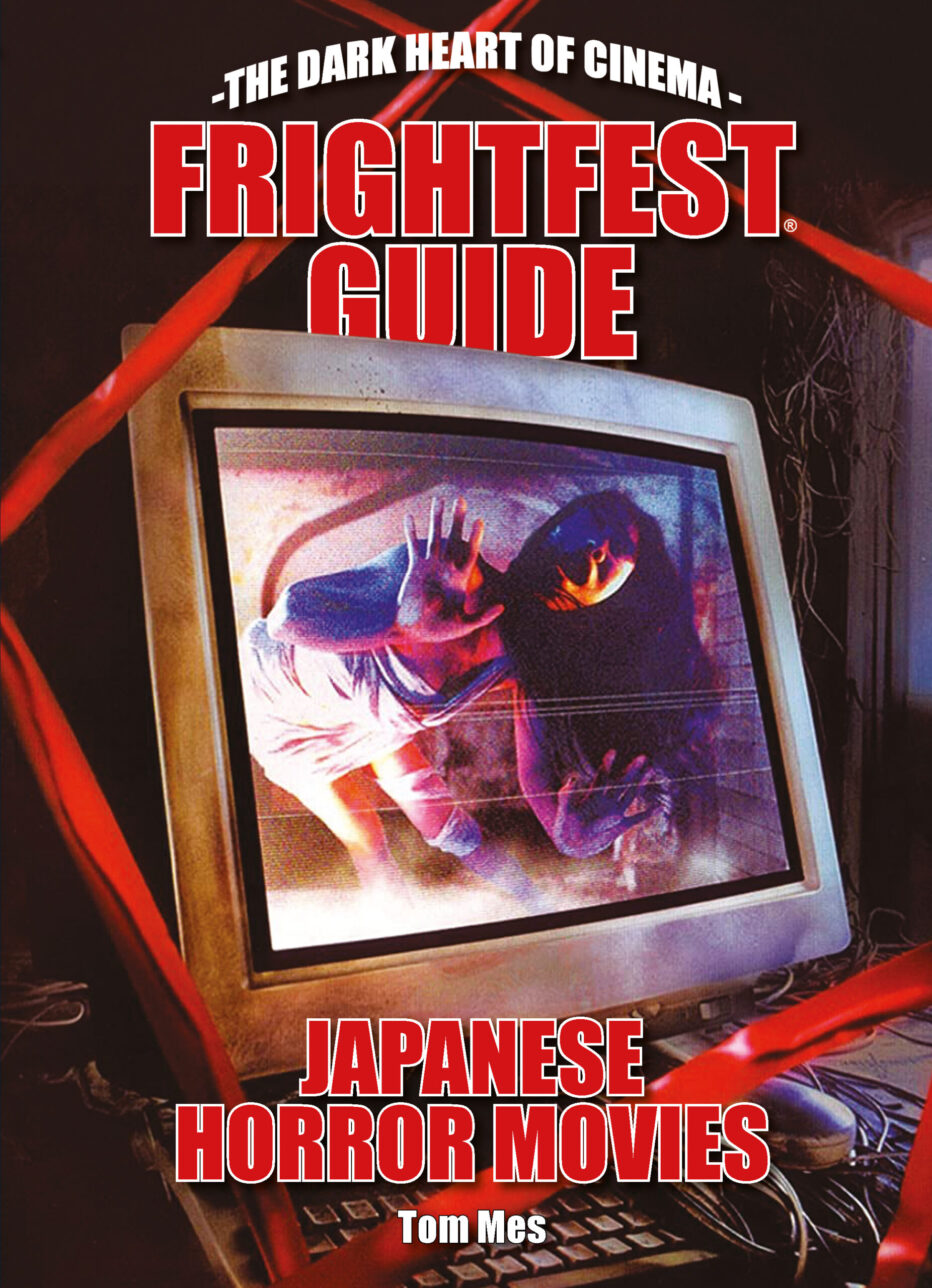
The FrightFest Guide to Japanese Horror Movies By Tom Mes Book Review
The FrightFest Guide to Japanese Horror Movies By Tom Mes Book Review
FrightFest and FAB Press have joined forces again with THE FRIGHTFEST GUIDE TO JAPANESE HORROR MOVIES, which initially went exclusively on sale during Tubi FrightFest 2026. The author, world-renowned Japanese cinema expert Tom Mes, was present during the festival to introduce select Japanese horror movie screenings and to sign copies of his book. This paperback edition will be available to buy from 27 October 2026.
From the sumptuous scares of Kwaidan to the cold chills of Dark Water, Japanese horror movies have been inducing shivers in viewers across the globe for decades. Iconic long-haired female ghosts and impish yokai monsters, king of the monsters Godzilla and other city-stomping fellow kaiju – the fantastical bestiary of Japanese horror is firmly ingrained in our collective imagination.
Renowned Japanese film expert Tom Mes takes you on a journey through a century of horror, during which you will encounter cat demons, mushroom people, snake girls and snow maidens, along with Japan’s unique takes on zombies, vampires, werewolves and haunted houses. Take descents into hell, wade through the crimson rivers of 1980s splatter, and wallow in the wild excesses of modern masters like Takashi Miike and Shinya Tsukamoto.
Thanks to Ring and its iconic cursed videotape, the turn of the millennium saw a worldwide boom in Japanese ghost films, and a host of Hollywood remakes, but The FrightFest Guide to Japanese Horror Movies takes you back to this distinctive movement’s roots.
Following the success of the previous seven editions: The FrightFest Guides to Exploitation Movies, Monster Movies, Ghost Movies, Werewolf Movies, Grindhouse Movies, Vampire Movies and Mad Doctor Movies, this is the latest in a series of wide appeal books for both the curious spectator and the cult connoisseur.
With a foreword by master filmmaker Kiyoshi Kurosawa, the globally acclaimed director behind such great Japanese horror films as Cure and Pulse, and another from film critic, author and FrightFest founder Alan Jones, The FrightFest Guide to Japanese Horror Movies certainly arrives with some impressive names attached.
The book begins with numerous introductory chapters, and these proved to be the denser sections for me, particularly those attempting to explain exactly what ‘J-Horror’ is and how the term came into existence. Neither question appears to have a definitive answer, or at least that was my conclusion after reading the opening chapters. Once I had navigated my way through them, however, the book became something of a walk in the park, with the subsequent entries considerably less dense and much easier to digest.
For the most part, each film covered is afforded a page of its own, although some receive half a page, while the more significant titles, such as Ring, quite rightly warrant a couple of pages. Vibrantly coloured stills and posters accompany the text throughout, making this as visually appealing as it is informative. It made for a genuinely enjoyable read, and although there are inevitably plenty of films I have already seen — I am, after all, a horror film critic — there are also a considerable number that I now desperately want to seek out. Quite how easy that will be is another matter.
The book provides an illuminating look at the development and diversity of Japanese horror. Early examples were often rooted in ghost stories, including the wonderfully bizarre tradition of ghost cats, where a feline could apparently become possessed by the spirit of a murdered person simply by licking up their blood. Later came the now-familiar long-haired female apparitions that became so commonplace following the international success of the original Ring.
There is plenty of variety beyond the expected feature films, too, with horror shorts, including animated examples, alongside such essential titles as the original Godzilla and, more latterly, the excellent and disturbing Perfect Blue. This broad approach makes the book feel considerably more comprehensive than a straightforward guide to J-Horror’s most recognisable films.
One entry I particularly enjoyed was the piece on Shinya Tsukamoto’s 1989 visual and aural tour-de-force Tetsuo: The Iron Man. For me, this remains one of the most innovative and genuinely unique films ever made, regardless of genre. Reading about the difficulties involved in its production, and how several people eventually walked away from the project, makes perfect sense when you consider just how much of a one-off Tsukamoto’s film remains.
Tetsuo was particularly important to me during my formative years as a film fan. It opened my eyes fully to the delights of world cinema and, especially, Japanese horror. Once that door was opened, I never looked back.
Ultimately, The FrightFest Guide to Japanese Horror Movies is an extensive and worthwhile addition to any horror fan’s book collection. It offers plenty for those already familiar with Japanese horror while providing an enticing introduction for anyone wanting to explore the genre further. Of the FrightFest guides I have read to date, this is my favourite of the lot.